


The Dovetails standard
What leaves our shop carries our name.
We build in small numbers, answer our own email, and put our hands on every piece before it leaves. These are the standards we hold ourselves to, no matter what we are making.
- Built hereDesigned and made in our workshop. Not outsourced, white-labeled, or bought finished.
- Materials named plainlyWe tell you what a piece is made from, where it matters, and why we chose it.
- Designed for real roomsIt has to work once someone lives with it, not just look good in a photograph.
- Clear expectationsWe tell you what is in stock, what is made to order, and when it should leave the shop.
- We make it rightIf something arrives damaged or is not as it should be, we take care of it.
For this piece
- Cut from a single board
- Ebony-dyed white oak dividers
- Pure tung oil finish, fully cured
- Fits blades up to 10 inches
- Five slots, more on request
- Handmade in Bessemer, Alabama

One board
Every block comes from a single board.
We just didn't want to make The Chain that way.
Each one starts with a single board. We lay out the entire block before we make the first cut, looking for the stretch where the grain, figure and color belong together. Then we cut the individual pieces and put them back together in the same order they grew.
So the grain doesn't start over at every divider. The color doesn't suddenly change halfway across. What you are looking at is one continuous piece of wood, separated only by the spaces that hold your knives.
It costs us more lumber. Sometimes a beautiful board gets passed over simply because the right stretch isn't there.
But that is also what we love about it.
The color is the color of one tree. The figure is its figure. And when the light moves across The Chain, you can still see the board it came from.
Material honesty
This is the wood. Not a picture of the wood.
Acacia, rubberwood, bamboo. Stained darker. Stained warmer. Made to read as walnut or oak from a few feet away.
We would rather start with the real thing.
Walnut is walnut. White oak is white oak. The color comes from the tree, not from a stain trying to make it into something else. As the finish wears and the wood ages, that does not change.
The dividers are the exception. We dye the white oak a deep ebony with Fiddes, a color we have shipped from Australia because we have never found another black quite like it. It is warmer than ink, softer than jet black, almost like strong coffee.
Most people would probably never know the difference.
We do.
And once you care about things like that, it is hard to stop.

Dividers seated into milled grooves. The knife slots are the gaps left between them.
Shop note
We were at the bench playing with a few new knife block ideas when Fleetwood Mac came on. The Chain started playing, and the whole thing suddenly made sense.
The block was already becoming a series of repeating parts, one linked to the next. Divider, slot, divider, slot. Add one and the block grows. Take one away and it gets smaller.
That song did more than give the piece a name. It gave us the idea.
And somehow, the knife block that started with a song became the one people ask for most.
Choose the wood
Same design. Different personality.
The only decision left is which wood belongs on your counter.
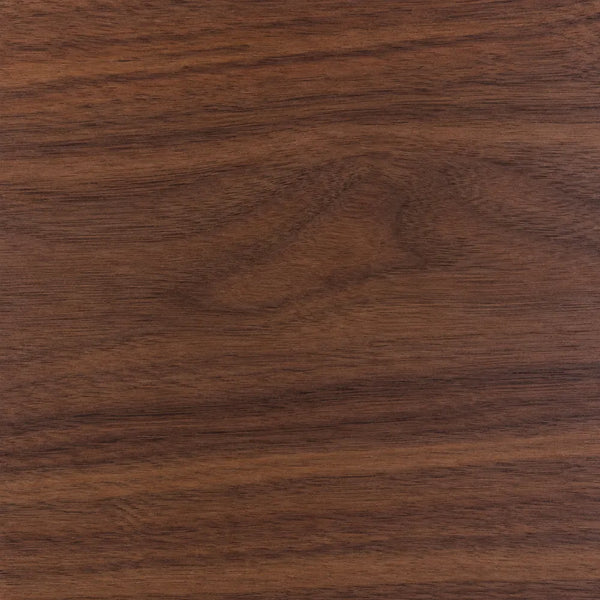
Walnut
Walnut doesn't ask for attention. It already has it. Deep chocolate brown with a quiet authority that settles a busy room rather than competing with it. It's the wood we reach for when a piece should feel like it has always belonged there.
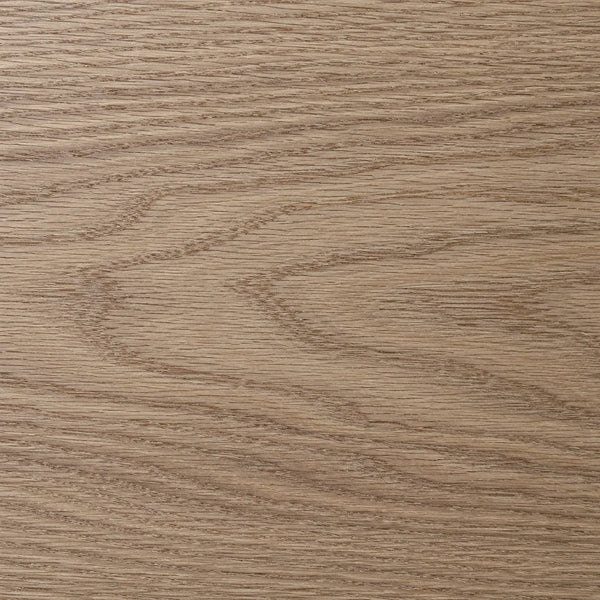
White Oak
White oak has structure. The grain is more pronounced, the lines more confident, and it sits naturally against modern rooms and black hardware. If walnut feels quiet, white oak feels intentional.
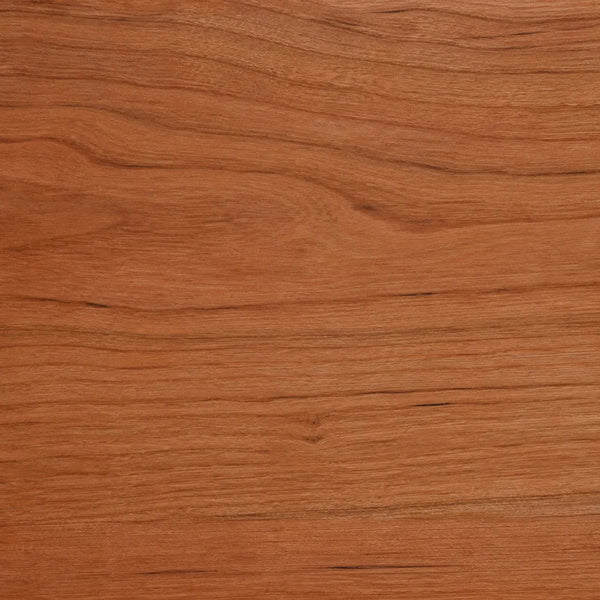
Cherry
Cherry is the only one that keeps changing after it leaves our shop. It starts warm and gets richer every year, especially in sunlight. If you like the idea that your home should tell time, cherry rewards patience.
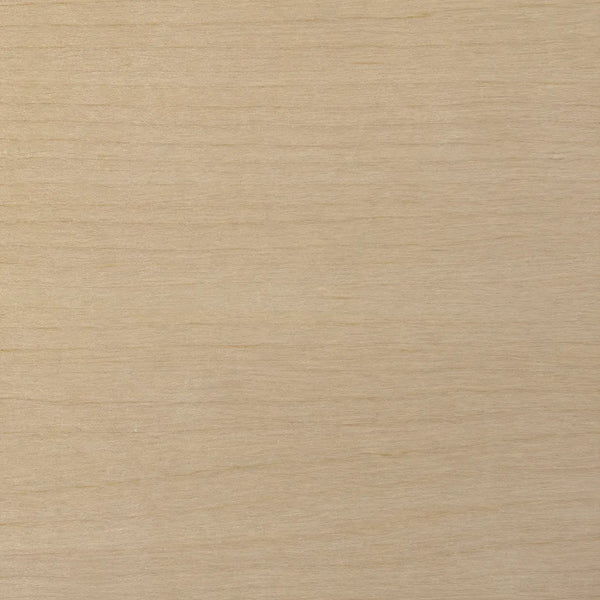
Maple
Maple lets everything around it do the talking. It brings light into a darker room without demanding attention, and the finish leaves it with a soft honey tone instead of a pale, unfinished look.

Rosewood
Rosewood is the one we don't make often, and never casually. Dark, oily, streaked with near-black, it's the most dramatic wood on the bench. When we find a board worth it, we build a few and then we wait for the next.

Quarter-sawn White Oak
Quarter-sawn white oak has more movement than maple, but it still knows how to behave. The straight grain keeps it orderly, while the fleck catches the light just enough to make the surface interesting. It works especially well in kitchens that lean warm, natural, or a little more architectural.
A wipe with a damp cloth after use is enough for daily care. Every few months, or whenever the wood begins to look dry, apply a light coat of beeswax and buff with a soft cloth. Never put it in the dishwasher, and do not let it soak.
Specifications
Every measurement has a reason.

| Height | 10 1/4" |
|---|---|
| Width | 6 1/16" |
| Depth | 3 1/4" |
| Weight | 5 lb (varies by hardwood choice) |
| Slots | 5 standard, more on request |
| Slot size | Approx. 2 1/4" wide x 5/16" |
| Blade capacity | Up to 10" |
| Body | Solid hardwood, single board |
| Dividers | Ebony-dyed white oak |
| Finish | Pure tung oil, cured |
| Built | One at a time |
In the box
- The Chain knife block in your chosen hardwood
- Care card
Frequently asked questions
Before it goes on your counter.
Will my chef's knife fit?
The exception is a cleaver. Most are too wide through the heel, and we would rather tell you that now than after it arrives. If you are unsure about a particular knife, send us a message with the make and model and we will measure it against a block.
How are the slots made?
Is the finish food-safe?
Do knife blocks dull knives?
The Chain is built the other way around. The slots are wider than the blade, so a knife drops in and lifts out without the edge touching either side. The dividers also keep blades from resting against each other, which is the other common way knives get dulled in storage.
You will still need to sharpen. Every knife does. But the block will not be the reason.
Are wooden knife blocks sanitary?
Wood gets a bad reputation here, usually from blocks with deep, narrow, sealed wells that trap moisture and never fully dry.
The Chain's slots are open front to back and wider than the blade, so air moves through and nothing stays damp. The tung oil finish seals the surface rather than leaving raw grain exposed. Dry your knives before they go in, wipe the block down now and then, and it will stay clean for decades.
How do you clean and oil a wooden knife block?
Every few months, give it a swipe of beeswax or food-grade mineral oil to keep the surface from drying out. Do not soak it, do not run it under the tap, and never put it in the dishwasher, that is what splits wooden kitchen pieces.
What is the best wood for a knife block?
Walnut is our most popular. Deep brown, and it shows the single-board grain better than anything else we build in. White oak reads brighter and more modern, and quarter-sawn oak adds the ray fleck figure you see in Craftsman furniture. Cherry starts pale and darkens noticeably over the first year, which some people love and some are surprised by. Maple is the quietest option. Rosewood is the most dramatic, and the most limited.
If you are torn, tell us about your kitchen and we will give you an honest opinion rather than the expensive one.
What makes a handmade knife block different from a store-bought one?
The first is the wood itself. Most blocks on a store shelf are acacia, rubberwood, or bamboo, stained to read as something more expensive. We use domestic hardwood and name the species, and every Chain comes from a single board rather than strips glued together.
The second is how it goes together. The body is solid hardwood with grooves milled into it, and the ebony-dyed white oak dividers are glued and press-fit into those grooves. The knife slots are the gaps the dividers leave — every opening is defined by two finished surfaces rather than a saw kerf.
The third is who makes it. A factory block is a program: the same file, the same cuts, ten thousand times, with nobody looking at the wood. We build these one at a time. Every board gets laid out by hand, and someone decides which stretch of grain belongs in the block and which face goes forward. Machines are involved — we are not carving these with chisels — but they are guided by a person making decisions, not following a file.