




The Dovetails standard
What leaves our shop carries our name.
We build in small numbers, answer our own email, and put our hands on every piece before it leaves. These are the standards we hold ourselves to, no matter what we are making.
- Built hereDesigned and made in our workshop. Not outsourced, white-labeled, or bought finished.
- Materials named plainlyWe tell you what a piece is made from, where it matters, and why we chose it.
- Designed for real roomsIt has to work once someone lives with it, not just look good in a photograph.
- Clear expectationsWe tell you what is in stock, what is made to order, and when it should leave the shop.
- We make it rightIf something arrives damaged or is not as it should be, we take care of it.
For this piece
- Built by hand in our workshop
- Solid hardwood from front to back
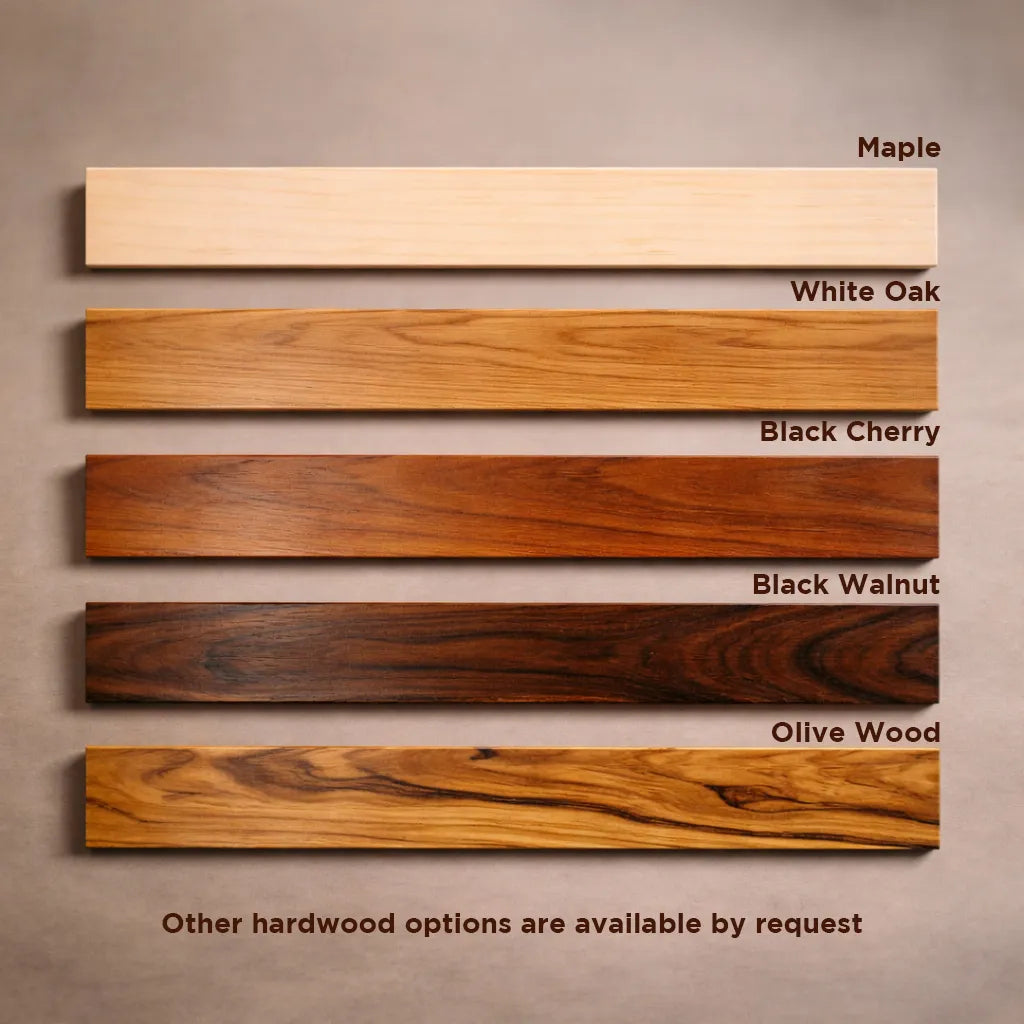
- Five hardwood choices
- Most woods ship the next business day
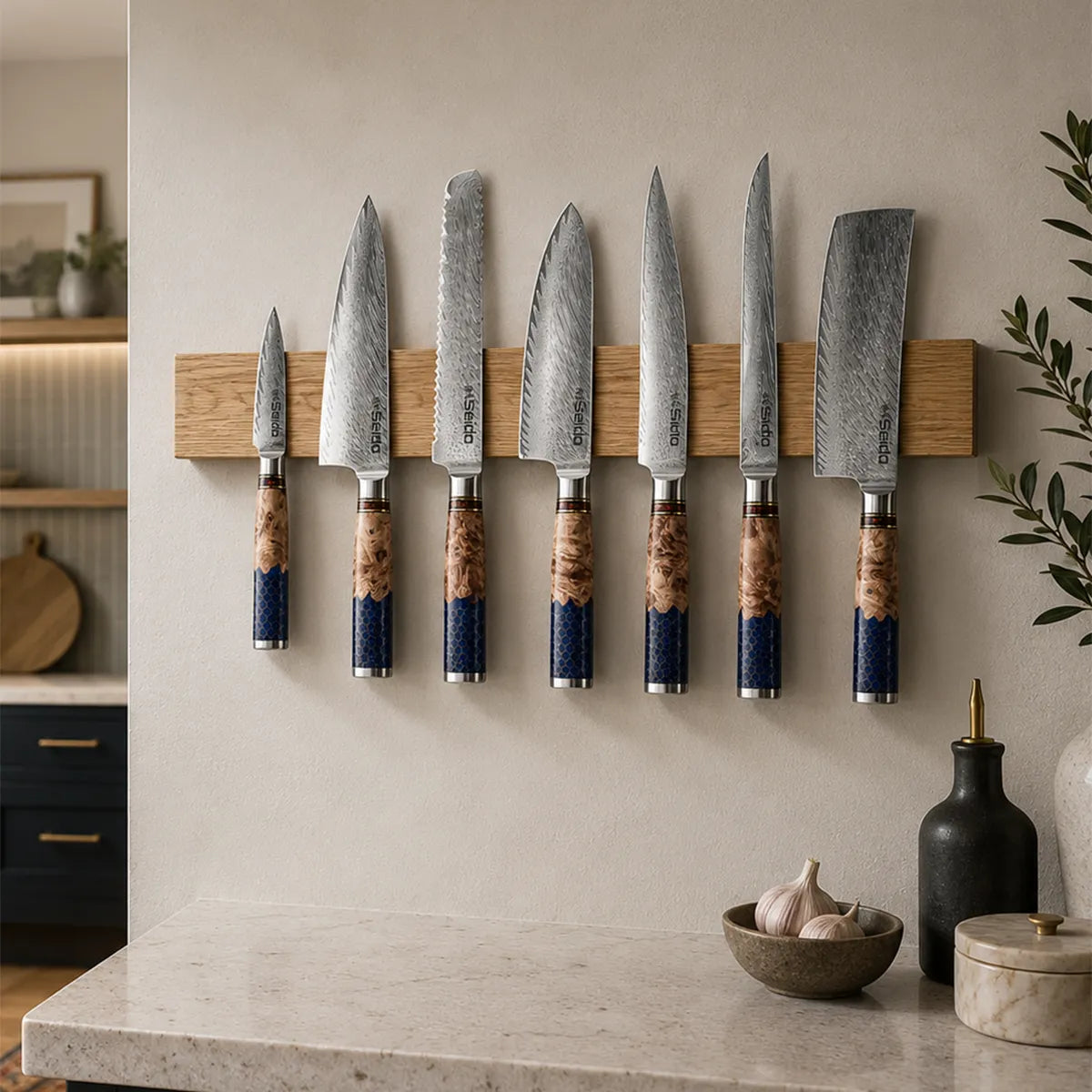
- Seven-magnet layout
- Complimentary continental U.S. shipping

Where it starts
It starts with a board we'd keep.
Every one starts with a board we'd be happy to hang in our own kitchen. If the grain doesn't catch our eye, or the board simply doesn't feel right in the hand, it waits for another project. We turn down more lumber than we use. Not because every board has to be dramatic, but because every board has to feel like it belongs.
That's the slower way to build.
Long before the magnets go in, we're already making decisions that most people will never notice. Which face becomes the front. Which end points left. Whether the grain flows quietly across the length of the rack or makes more of a statement.
None of those choices change how well it holds a knife. They change how it feels to live with.
We don't think of Gimme Shelter as kitchen hardware. We think of it as a small piece of furniture that happens to hold knives. And we build it that way.
The part you can't see
The spacing wasn't an accident.
Most magnetic knife racks work well enough until you actually fill them with knives.
As the rack fills up, blades start drifting toward each other. Handles touch. The knife you reach for most ends up wedged between two others. You find yourself nudging knives sideways every time you put one back.
We noticed it because we lived with it.
We spent more evenings than we'd like to admit moving magnets around inside scrap boards. Too close together and the knives crowded each other. Too far apart and the rack lost the flexibility to hold whatever happened to be in use that night.
Eventually we stopped experimenting. Not because we'd run out of ideas, but because we finally stopped finding ways to improve it.
The spacing you see today is simply the one that worked best.
Every magnet sits in its own pocket, drilled from the back of the rack. That lets us place each one exactly where we want it while leaving the front face uninterrupted. Turn it over and you'll see the work. Turn it back around and all you see is wood.

Fig. 3. Every magnet is installed from the back, leaving the front face uninterrupted. The only thing you'll ever see is the wood.
Shop note
That’s probably why almost everything we make ends up named after a song. Music is part of the rhythm of the shop, and frankly, it just makes the day better.
Gimme Shelter was one of those songs. It inspired this piece and gave it its name.
Five hardwoods
Same rack. Same magnets. Same finish.
The only decision left is which wood feels most at home in your kitchen.
Cherry
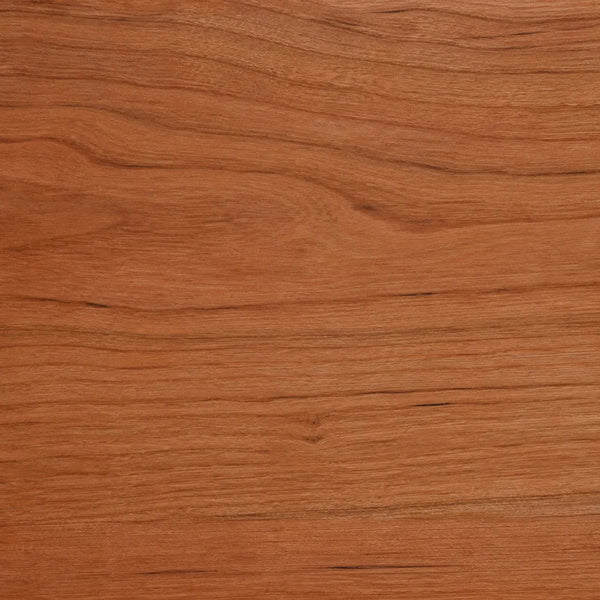
Cherry is the only one that keeps changing after it leaves our shop. It starts warm and gets richer every year, especially in sunlight. If you like the idea that your home should tell time, cherry rewards patience.
Walnut
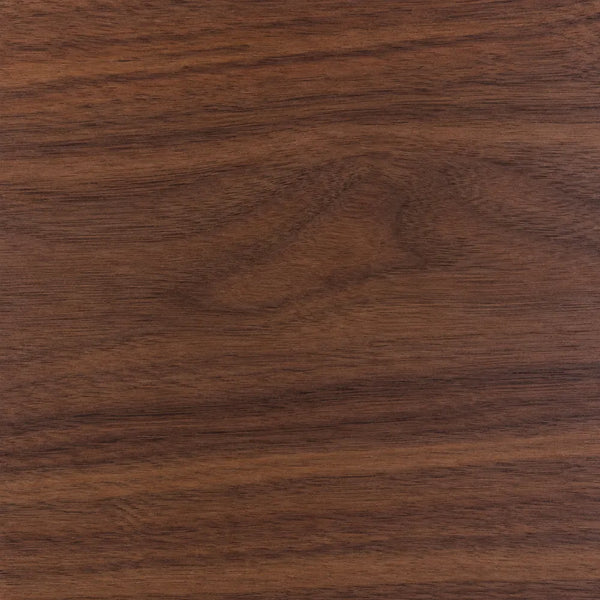
Walnut doesn't ask for attention. It already has it. Deep chocolate brown with a quiet authority that settles a busy room rather than competing with it. It's the wood we reach for when a piece should feel like it has always belonged there.
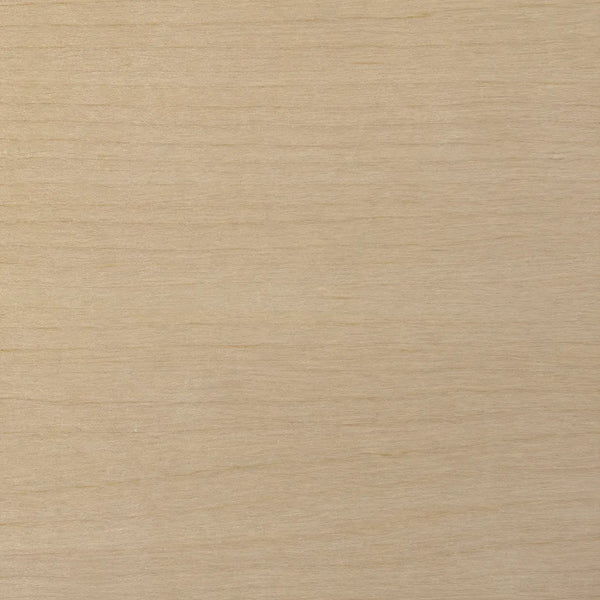
Maple
Maple lets everything around it do the talking. It brings light into a darker room without demanding attention, and the finish leaves it with a soft honey tone instead of a pale, unfinished look.
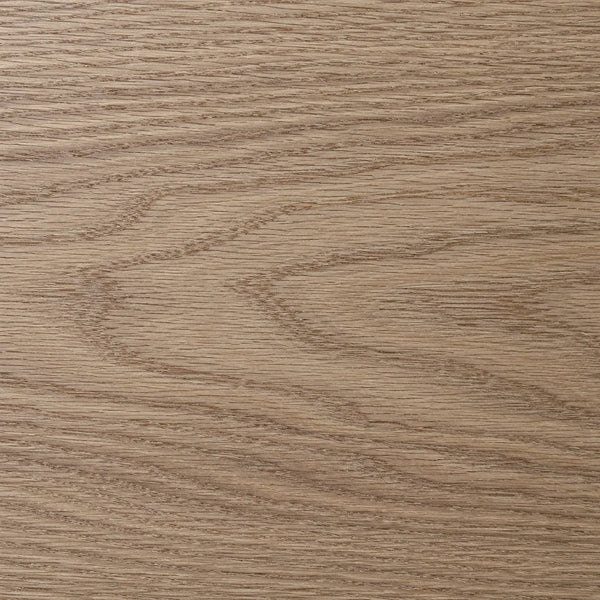
White Oak
White oak has structure. The grain is more pronounced, the lines more confident, and it sits naturally against modern rooms and black hardware. If walnut feels quiet, white oak feels intentional.

Olive
No two olive boards ever agree with each other. That's exactly why we love them. We only make these when we find a board worth cutting into, so availability comes and goes. When they're gone, we wait until the next exceptional board arrives.
Wipe it with a damp cloth when needed. Refresh it with a food-safe oil once or twice a year, or whenever the wood starts looking thirsty. Plain mineral oil is fine. Don't run it under water and don't put it in a dishwasher.
Specifications
Every measurement has a reason.

| Length | 24" |
|---|---|
| Height | 3 1/2" |
| Thickness | 3/4" |
| Weight | Varies by wood choice |
| Capacity | Up to 7 knives |
| Magnets | Seven, individually positioned |
| Magnet grade | Rare-earth N52 |
| Spacing | 3" on center |
| Material | Solid hardwood |
| Finish | Food-safe oil |
| Mounting | Four #8 brass screws with finish washers |
| Built | One at a time |
In the box
- Gimme Shelter magnetic knife rack
- Four #8 brass screws with finish washers
- Drywall anchors
Frequently asked questions
Before you hang one on your wall.
How many knives fit on a 24-inch magnetic knife rack?
A magnetic knife holder that quotes a higher number is usually measuring how many blades will physically stick, not how many you can reach for without moving another one first.
Can I store Japanese knives on a magnetic knife strip?
Two things to watch. Lay the blade on rather than sliding it, since a thin edge chips more easily than a thick one. And hang a single-bevel knife with the flat side against the wood.
Will this magnetic knife rack hold a cleaver?
We hang ours on the right end of the rack. A cleaver is the widest thing up there, and it looks settled at the end rather than crowding the knives beside it. It also keeps the heaviest blade nearest a mounting point.