
Handmade
Knife Storage
Hardwood knife blocks and wall-mounted magnetic knife racks, crafted one at a time from solid hardwood in our Birmingham, Alabama studio. Whether you want countertop knife storage or a way to keep the kitchen counter clear, each piece is built around the blades it holds.

Hardwood Knife Blocks
Solid hardwood knife blocks that live on the counter. Slotted designs and a freestanding magnetic block, each cut from a single species of solid wood.
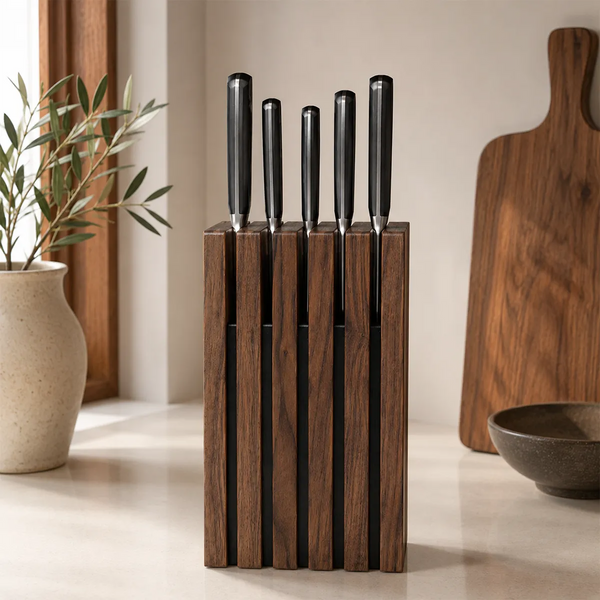
Solid Wood Knife Block – The Chain
Five knives, without the block taking over the counter. Minimal, open, and built to be seen.
Walnut · White Oak · Cherry · Maple · Rosewood · Quartersawn oak
From $179.00
View Solid Wood Knife Block – The Chain →
Mid-Century Modern Walnut Knife Block | Roundabout
$425.00
View Mid-Century Modern Walnut Knife Block | Roundabout →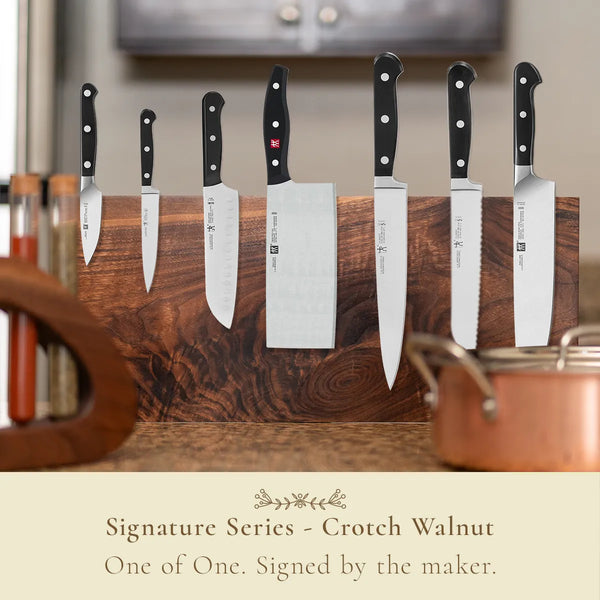
Walnut Magnetic Knife Rack | Signature Series: Child of Nature
$345.00
View Walnut Magnetic Knife Rack | Signature Series: Child of Nature →Wall-Mounted Magnetic Knife Racks
Prefer to keep the counter clear? A wall-mounted magnetic knife rack holds blades on concealed rare-earth magnets. Call it a magnetic knife bar, magnetic knife strip, or magnetic knife holder.

Gimme Shelter Magnetic Knife Rack
Seven knives off the counter, each with its own magnet. Solid hardwood on the front, all the engineering hidden behind it
Cherry · Maple · White Oak · Olive · Walnut
From $135.00
View Gimme Shelter Magnetic Knife Rack →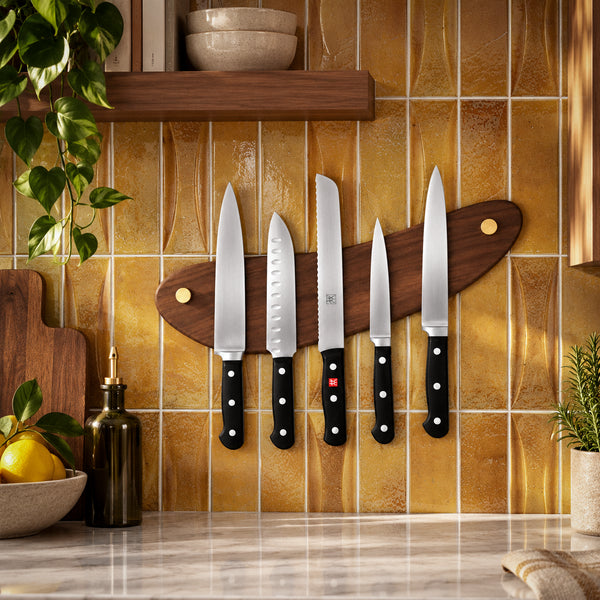
Mid-Century Magnetic Knife Rack – The Look of Love
Mid-century curves in solid walnut. You decide how much rake feels right.
$145.00
View Mid-Century Magnetic Knife Rack – The Look of Love →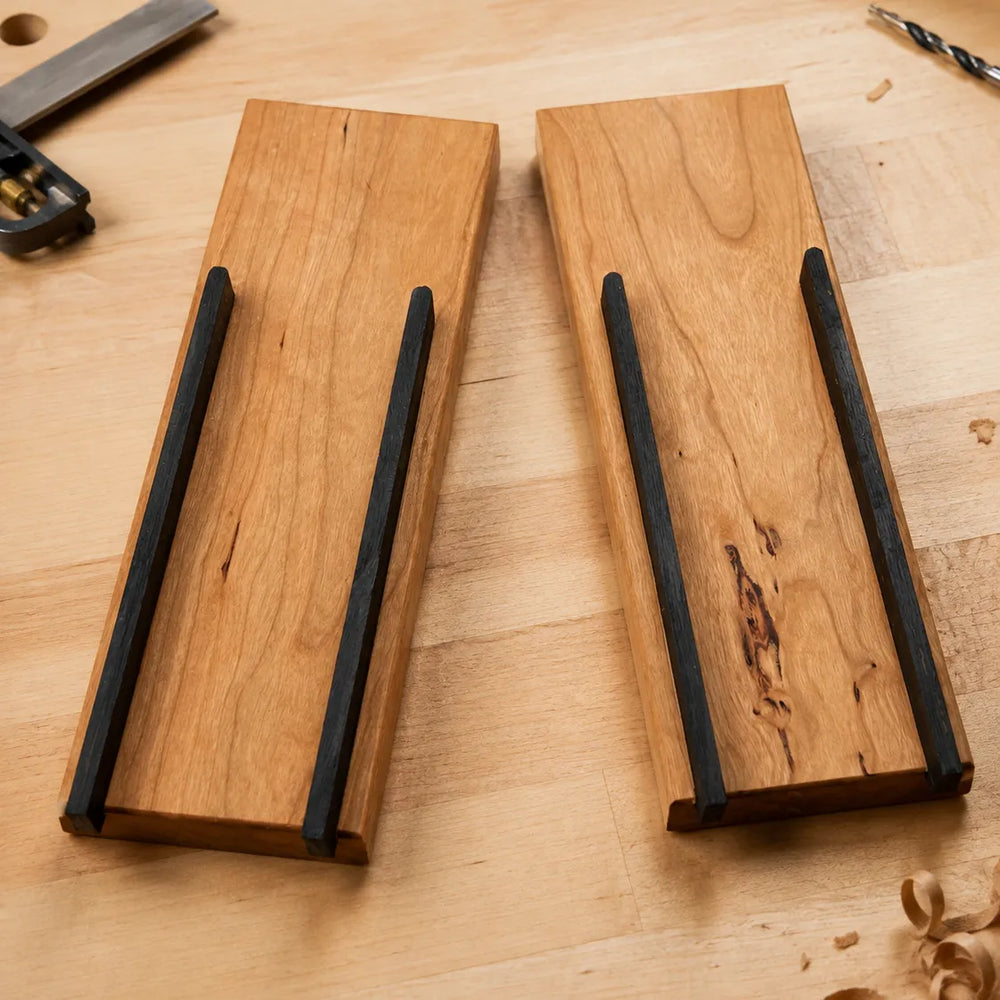
The Principles
What makes a good knife block
A block is only as good as the way it holds a blade. We set the spacing so blades never rest against one another, helping protect the edge between sharpenings, and give wide heels the clearance they need to drop in cleanly.
Slot depth is designed around the knives the block is meant to hold, not simply cut to one universal depth, and every piece is weighted to stay put when you pull a knife in a hurry. A block should fit the collection it holds rather than advertising twenty slots you'll never fill. Solid hardwood makes a block durable and repairable, but material alone doesn't rescue a poor design.
Want the full breakdown? Read What Makes a Good Knife Block →
Built Around the Working Set
Fit the knives you use, not every knife you own
Oversized universal blocks can hold 20, 30, even 40 knives, but that much capacity usually comes with a lot of counter space and a lot of visual noise. We'd rather keep the knives you reach for most within easy reach, then build around those.
Everyday five-knife set
Chef's, bread, utility, paring, santoku. For most kitchens, that's the working set. A compact slotted block keeps those knives close without giving half the counter to blades you rarely touch.
Japanese knives
Taller heels and thinner edges need more thoughtful spacing. A made-to-order block can account for blade height and shape, while a magnetic rack keeps the whole blade visible and easy to grab.
Cleavers and wide blades
Where universal blocks start to break down. Wide heels, tall blades, and unusual profiles rarely fit standard slots. A made-to-order block or magnetic rack gives them room without forcing the rest into an oversized holder.
Small or mixed collection
Three or four knives you actually use can be more useful than twenty empty slots waiting to be filled. A compact block or short magnetic rack keeps the working set accessible and the counter quieter.
The Material
Choosing the wood
Every piece is solid hardwood. The species is about how it lives in your kitchen.
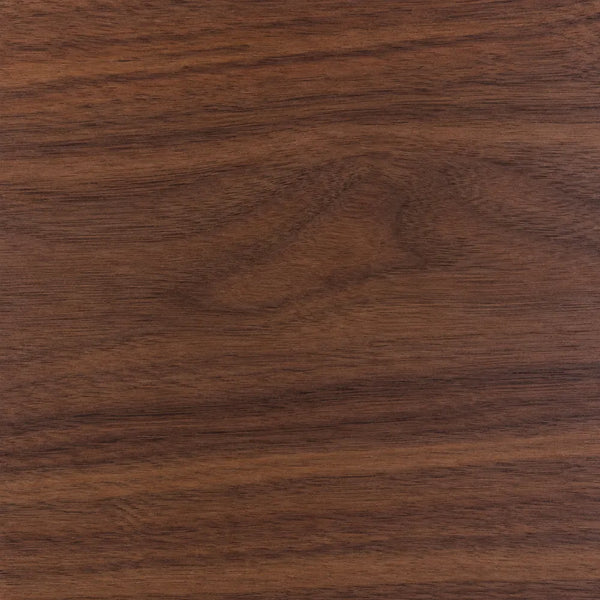
Walnut
A walnut knife block reads dark and quiet, easy to live with. Especially good against lighter stone or pale cabinetry.
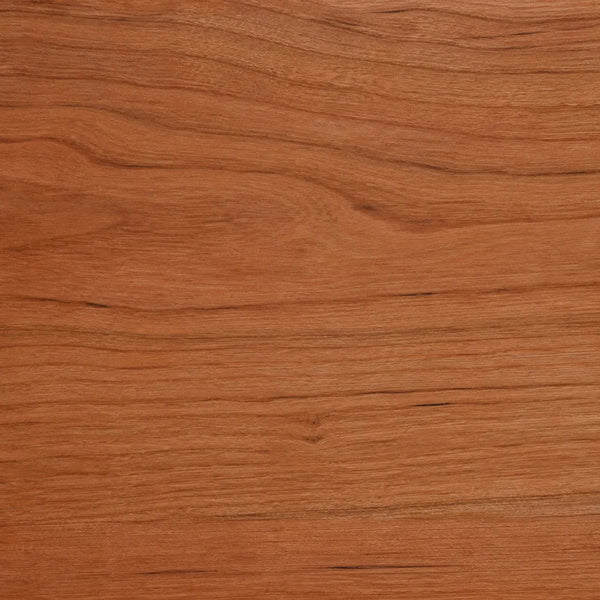
Cherry
Warmer and more expressive. Cherry deepens naturally as it ages, so the piece earns its color over time.
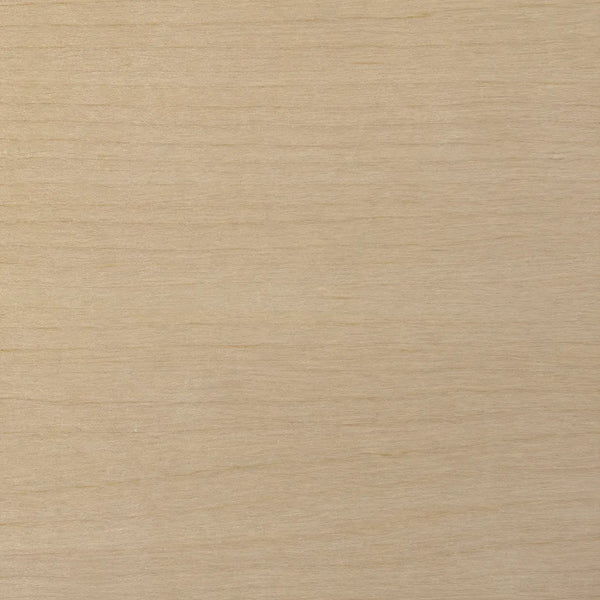
Maple
A maple knife block stays light and clean, with a softer visual presence. Recedes rather than announces itself.
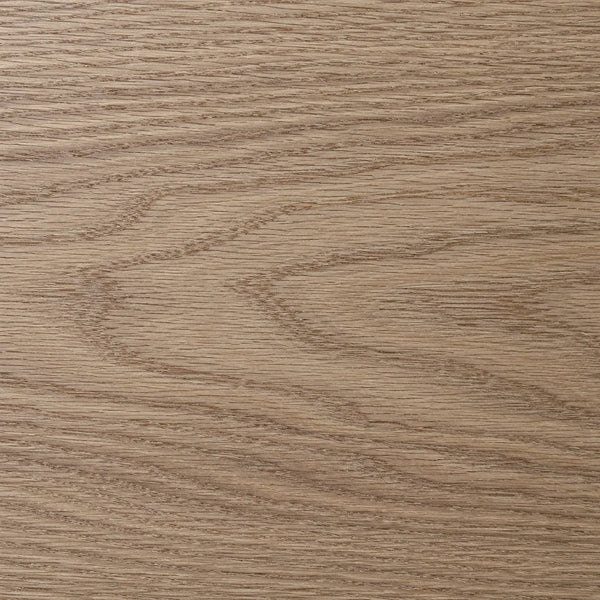
White Oak
More architectural. Strong, open grain and a firmer presence.
Also in quartersawn, for tighter, straighter figure.
Need something else? We regularly build in olive, rosewood, figured hardwoods, and other species when the piece calls for it. Just ask.
Made to Order
Built around the knives you own
Knife collections rarely arrive as neat matching sets. You may have a tall nakiri, a long bread knife, a cleaver, a honing steel, or simply six knives instead of five.
When the standard layout isn't the right answer, we change the knife count, slot width, spacing, or wood species around the collection already in your kitchen, whether it's a knife block or a knife rack.
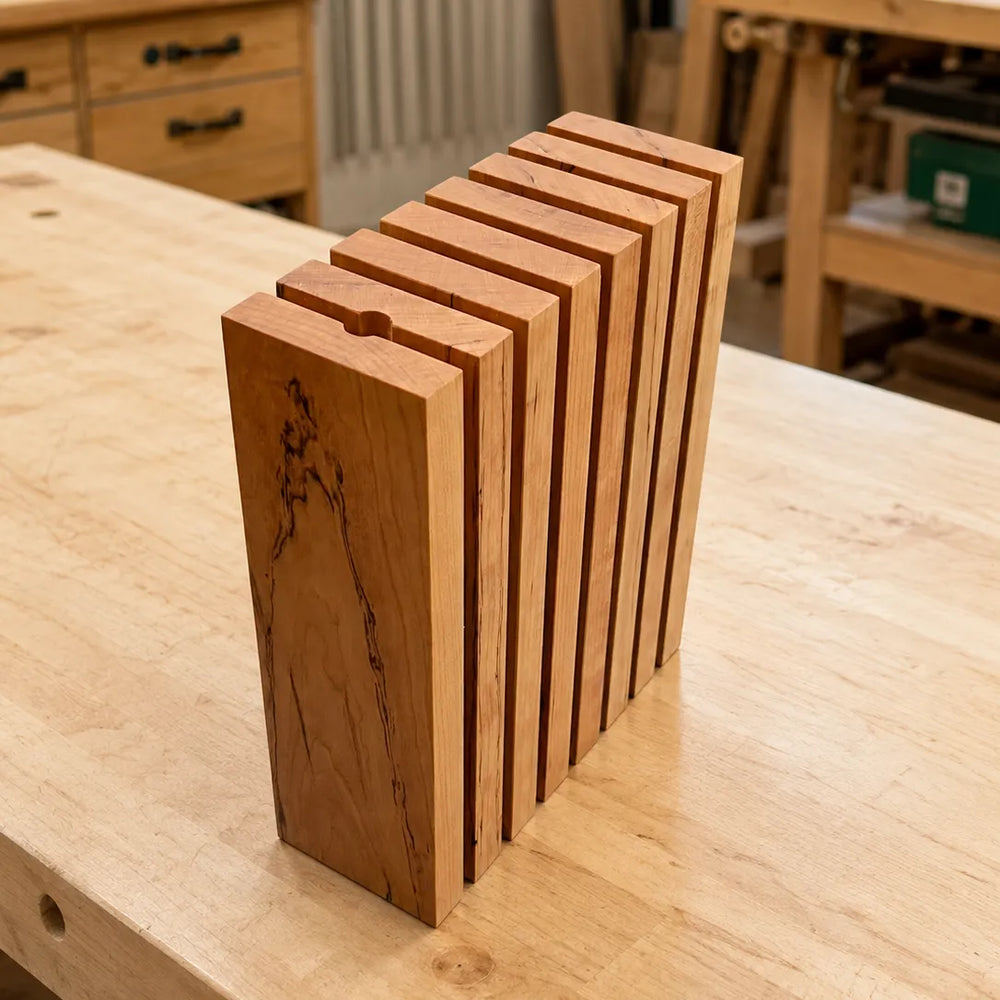
Built for six knives and a honing steel, because the right layout starts with what's already in your kitchen.
The Dovetails Standard
What leaves our shop carries our name.
We build in small numbers, answer our own email, and put our hands on every piece before it leaves. These are the standards we hold ourselves to, no matter what we're making.
Solid hardwood
For our knife storage, that means solid hardwood front to back, chosen for the way the piece is built and used.
Cut to fit the knives
Slots and spacing shaped to the blades they'll hold, not stamped to a template.
Finished to last
Sanded past the point of looking done, then a food-safe oil you can refresh at home.
Repairable, not disposable
Solid wood can be sanded and re-oiled for decades. If it ever needs attention, send it back and we'll refresh it.
What works in your kitchen
Knife block vs. magnetic knife rack
Two good answers to the same question. It comes down to your counter and how you like to see your knives.
| Knife block | Magnetic rack | |
|---|---|---|
| Location | On the counter | On the wall |
| Counter space | Uses some | Keeps counters clear |
| Installation | None | Wall mounted |
| Knives visible | Partially | Fully on display |
| Made to order | Yes | Yes |
Good to Know
Knife storage questions
Choosing between types. Each product page answers the specifics for that piece.
What's the best way to store kitchen knives?
For most kitchens, a well-designed hardwood knife block or magnetic knife rack is a good way to keep knives protected and within reach. Both keep blades separated instead of knocking together loose in a drawer. Which one makes more sense comes down to whether you'd rather use counter space or wall space.
Knife block or magnetic knife rack: which should I choose?
Choose a knife block if you want your knives on the counter with nothing to install. Choose a magnetic knife rack if you'd rather keep the counter clear and see every blade. A rack also lets carbon-steel knives dry in the open. Either can protect a good edge when the knives are held separately and the storage is designed well.
What types of knife storage do you make?
Slotted countertop blocks, a freestanding magnetic block, wall-mounted magnetic racks, and made-to-order versions of any of them. All solid hardwood, all built one at a time.
Are magnetic racks or knife blocks better for Japanese knives?
Both can work well for Japanese knives. A magnetic rack keeps thin blades visible and lets them dry in the open, while a properly sized block protects the blade inside the slot. Taller gyuto and nakiri blades may need more clearance than a standard block provides, which is something we can build around.
Do the knife blocks and magnetic racks include knives?
No. Our knife blocks and magnetic racks are sold as storage only, so they're designed for the knives you already own. Each product page lists the capacity and blade sizes that piece is designed to hold.
Where are your knife blocks and racks made?
Every knife block and magnetic knife rack is cut, shaped, sanded, and finished by hand in our Birmingham, Alabama studio. We build them here rather than outsourcing production or buying finished pieces.
Can you build custom knife storage?
Yes. Different knife counts, unusual sizes, a specific wood, or a rack for a particular wall. We build to order regularly. Tell us what you're working with and we'll figure out the right layout with you.
How do I choose the right size or capacity?
Count the knives you actually reach for, not the full drawer. Most people land at five to seven; a block or rack that fits what you use looks better and works better than one padded with empty slots. Each product page lists that piece's exact capacity.
Complimentary shipping
Included on every knife block and rack.
Built in Alabama
Made in our studio, not outsourced to a factory.
Made one at a time
The hands that build it are the same hands that pack it.
Questions? Ask us
You'll hear back from the people who make the piece.